

Which pickleball paddles provide the most explosive pop and power?
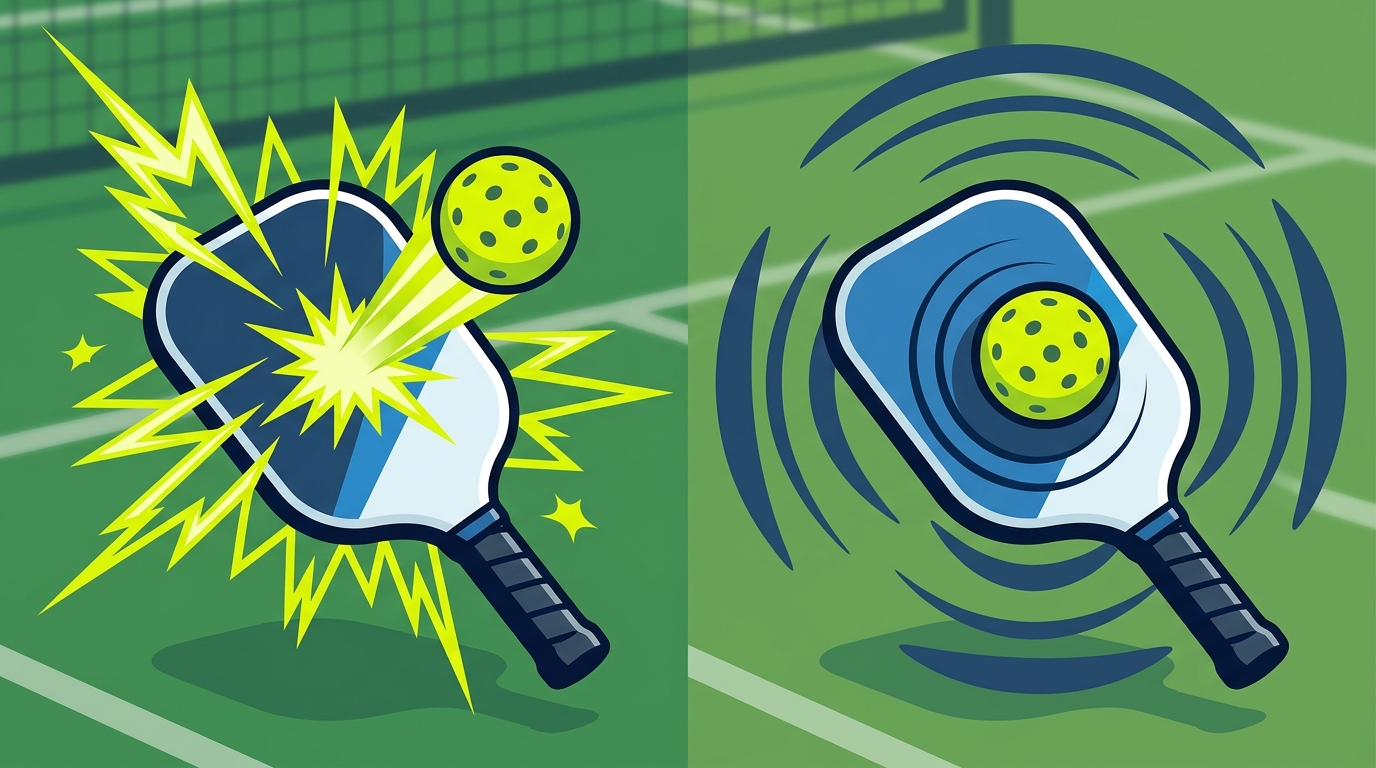
Not all power paddles hit the same way. Walk into any open-play session and you will hear two very different sounds coming off paddle faces: a sharp crack and a deeper thud. Those sounds represent two fundamentally different approaches to generating offensive force—pop-based power and dwell-based power. Understanding which mechanism suits your game is the single most important step toward choosing a paddle that genuinely elevates your offense.
At Godfather Pickleball, we stock paddles across both categories so every player—from weekend warriors to tournament grinders—can find the right weapon.
Two Engines of Power: Pop vs. Dwell
Pop-Based Power
Pop-based paddles launch the ball off the face almost instantly. The contact feels crisp and fast, rewarding compact swings with immediate pace. These paddles typically feature stiffer cores—traditional polypropylene honeycomb or dense foam—and thinner profiles (often 14 mm). Players who rely on quick hand exchanges at the kitchen line and punchy counter-attacks tend to gravitate here.
Dwell-Based Power
Dwell-based paddles hold the ball on the face a fraction of a second longer, letting the core compress and then spring the ball forward. Full-foam and foam-hybrid constructions dominate this category. The extra contact time also lets you shape the ball with spin and angle, which is why dwell-based power paddles have exploded in popularity among players who mix aggression with shot-making.
As Pickleheads explains the distinction, newer foam paddles have a feel where the ball rests on the face longer before launching, while pop-based paddles rocket the ball off immediately.
The Three Variables That Determine a Paddle's Power Profile
Regardless of whether a paddle leans pop or dwell, three spec-sheet variables shape where it lands on the power-control spectrum.
1. Core Thickness
Thinner cores (13–14 mm) generally produce more immediate pop because there is less material to absorb energy. Thicker 16 mm cores increase dwell time, providing a softer feel and better forgiveness on off-center hits while still producing explosive drives on full swings. Foam-core technology has disrupted this rule in 2026, with some foam paddles delivering both the pop of a thin core and the stability of a thick one.
2. Weight Distribution & Swing Weight
Paddles in the 8.0–8.4 oz midweight range tend to balance pace generation with the hand speed you need at the kitchen line. Head-heavy paddles generate more momentum through the swing arc, while balanced or handle-heavy paddles trade raw power for maneuverability. Independent reviewers now measure swing weight, twist weight, and balance point using calibrated equipment, giving buyers far more reliable data than static weight alone.
3. Face Material
Raw carbon fiber delivers a crisper, more powerful response, while textured carbon adds spin that pulls the ball down faster on drives. Some paddles layer fiberglass over carbon for an extra trampoline effect. Despite newer materials like Kevlar and titanium entering the market, carbon fiber remains the dominant face material on power paddle lists.
Foam Core Revolution: Why 2026 Changed Everything
For most of pickleball's history, paddles relied on polypropylene honeycomb cores. Poly cores were affordable and effective but could compress over time and offered inconsistent feel across the sweet spot. Full-foam and foam-enhanced cores now dominate the conversation. These cores provide more consistent energy return, less vibration, and broader sweet spots. They also tend to be more durable, resisting performance degradation over time.
Newer Gen-4 foam paddles promise a unified feel from edge to edge—fewer dead zones and more predictable feedback. The result is a paddle that can hit hard on a full drive yet still give you the touch to reset at the kitchen line.
Power Paddle Archetypes for Different Play Styles
Rather than a ranked list, here is a framework to match paddle archetypes to the way you actually play.
The Baseline Banger
What you need: Maximum pop, head-heavy balance, elongated shape for leverage on groundstrokes.
What to look for: Stiff cores, 14 mm thickness, raw carbon face. Paddles like the Selkirk Boomstik sit at this extreme—one of the hardest-hitting, poppiest paddles available, with MOI tuning weights that expand the sweet spot. At $333 it is the priciest option in the power category, and some reviewers note edge-guard durability concerns, but its explosive output is undeniable.
The Counter-Puncher
What you need: Quick hands, moderate power, generous sweet spot so off-center contacts still carry pace.
What to look for: Mid-weight foam-hybrid core, 16 mm thickness, textured carbon face. The Bread & Butter Loco is one of the most recommended power paddles because it is extremely well-rounded, offering high-tier pop without going over the top. It comes in all three shapes and costs under $200.
The Spin-and-Drive Attacker
What you need: Heavy topspin on drives that dips inside the baseline, plus enough dwell to roll volleys.
What to look for: Foam core with textured or long-lasting grit surface. The Spartus P1 Hybrid features what the brand calls "PermaGrit," a long-lasting texture designed to wear down considerably slower than regular raw carbon fiber. Paddles like the 11six24 Vapor Power2 also stand out for spin among power paddles thanks to their proprietary "HexGrit" surface.
The All-Court Aggressor
What you need: Power on demand without sacrificing resets and dinks—a paddle that attacks when you want it to and stays quiet when you don't.
What to look for: Gen-4 foam core, 16 mm profile, balanced swing weight. The CRBN TruFoam line combines plush dwell time with a fiberglass-and-carbon face that packs genuine pop on aggressive swings. The Gen 4 foam construction means the core will not degrade the way older honeycomb paddles do, so the power you get on day one is the power you get months later.
The Budget Power Seeker
What you need: Real offensive capability without a $250+ price tag.
What to look for: The Vatic Pro V-Sol Pro series brings power and forgiveness that competes with paddles far above its price point. GRUVN's LAZR 16-X Full Foam is another option that can work even for developing players who want to explore the power end of the spectrum.
How Grit Longevity Affects Power Over Time
A paddle's spin surface is directly tied to its ability to keep drives in the court at high pace. As grit wears off, power paddles become more difficult to control because the spin that normally pulls the ball down is diminished. Brands are addressing this with proprietary long-lasting textures. If you play frequently—four or more sessions per week—prioritize paddles with durable grit technology to maintain consistent offense over the life of the paddle.
Pro-Level Validation
Power paddles are not just for rec players looking for easy pace. Many of the top players in the world use power paddles or hybrids that lean into offense. The JOOLA Pro V series has become one of the most talked-about paddle lines in competitive pickleball, with unsponsored pros like Catherine Parenteau and Rafa Hewett reportedly switching to it. The Gearbox GX2 Power Hybrid's suspended carbon core design has also earned a spot in several pros' bags thanks to the way it stores and releases energy with control.
Key Takeaways
- Pop vs. dwell is the most important distinction when shopping for a power paddle—decide which feel matches your swing style before comparing models.
- Core thickness, weight distribution, and face material are the three variables that determine power output.
- Foam cores have reshaped the power category in 2026, offering broader sweet spots, more durable performance, and a blend of pop and control that honeycomb cores struggled to deliver.
- Grit longevity matters more than initial spin numbers—look for paddles with proprietary long-lasting textures if you play frequently.
- Price does not equal power—budget options like the Vatic Pro V-Sol Pro compete with paddles costing nearly twice as much.
- Browse power paddles, foam-core options, and all the accessories you need at Godfather Pickleball.
Frequently Asked Questions
What is the difference between pop-based and dwell-based power in pickleball paddles?
Pop-based power paddles launch the ball off the face almost instantly with a crisp, fast contact. Dwell-based power paddles hold the ball slightly longer, letting the core compress and spring forward. Foam-core paddles typically produce dwell-based power, while stiffer honeycomb or thin-core paddles produce pop-based power.
Are power paddles only for advanced players?
Not necessarily. Lighter or more forgiving power paddles can work for developing players, though ultra-poppy or stiff paddles are generally better for advanced players who already have solid touch and control. Choosing a forgiving foam-core power paddle is a good middle ground.
Does a heavier paddle always mean more power?
No. The most powerful paddles on expert lists average just over 8 oz—solidly in the midweight category. Heavyweight paddles generate more raw momentum but often have higher swing weights that make it harder to swing fast, which can actually reduce effective power.
How does core thickness affect power?
Thinner cores (13–14 mm) tend to produce more immediate pop because less material absorbs energy. Thicker 16 mm cores increase dwell time and forgiveness. Foam-core technology has blurred this line, with some 16 mm foam paddles delivering pop that rivals thinner traditional cores.
How long does a power paddle's spin surface last?
Standard raw carbon fiber grit can degrade noticeably within a few months of heavy play. Newer paddles with proprietary long-lasting grit technologies—like PermaGrit or HexGrit—are designed to maintain texture significantly longer, preserving the spin control that keeps powerful shots in the court.
Where can I buy power pickleball paddles?
Godfather Pickleball carries a curated selection of pro-tested power paddles, foam-core options, and complementary gear like shoes and bags—all in one place.
Explore more pro insights
All Articles